


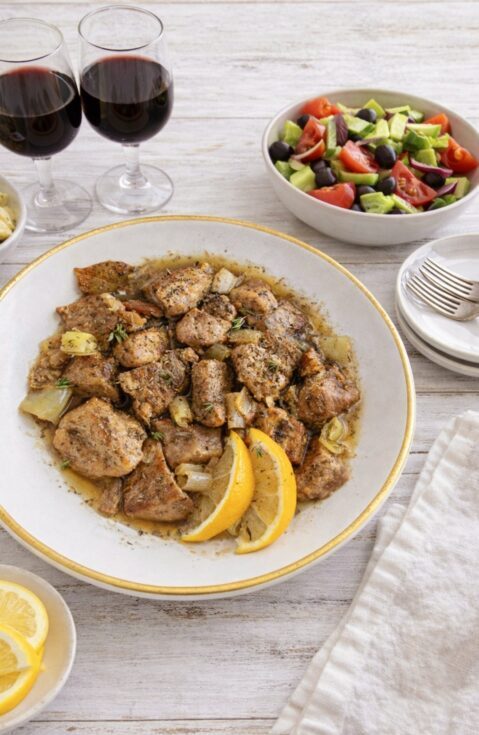
This dish right here is not just a “Greek pork recipe.”
It’s tigania. And in Greece, that word means something.
Tigania is one of the most beloved traditional meze dishes you’ll find on any Greek table.
If there are wine mezedes, if there is raki, if there is retsina, if friends are gathered around a table talking loudly and laughing, there is almost always a plate of tigania in the center.
It’s one of those dishes that belongs to conversation.
At its heart, tigania is beautifully simple.
Tender pork, usually shoulder, cut into chunks and cooked in olive oil until golden.
The meat is then deglazed with wine, allowing it to simmer gently until it becomes soft and flavorful, sitting in its own rich juices.
The result is bold, comforting, and deeply satisfying.
There are many versions across Greece.
Some families keep it minimal, just pork and leek like this one, allowing the sweetness of the leek to balance the richness of the meat.
Others add green or red peppers. In some regions you’ll find it with oregano and lemon, in others with mustard or even a touch of spice.
But no matter the variation, the foundation remains the same: good pork, olive oil, wine, and patience.
For me, tigania always feels personal. It reminds me of late afternoons when the table fills slowly, when someone pours the first glass of wine before the food is even ready, when the kitchen smells of seared meat and warm olive oil.
It’s not a complicated dish. It doesn’t try to impress. And yet it always disappears first.
That’s the magic of tigania.
Simple ingredients, cooked properly, shared with the right people.
Crockery & ingredients love using—find them all here: My Mediterranean Greek Pantry
800 g pork shoulder, cut into medium chunks
1 large leek, white part only, finely sliced
1 large onion, finely chopped
1 cup dry red wine
⅓ cup extra virgin olive oil
1 teaspoon chili flakes
1 tablespoon sweet paprika
Salt
Freshly ground black pepper
Optional for serving
Fresh oregano
Lemon wedges
Directions
Pat the pork dry with kitchen paper. This is important. If the meat is wet, it will boil instead of sear.
Season generously with salt, pepper, chili flakes and sweet paprika. Mix well so every piece is coated.
Heat the olive oil in a wide heavy skillet over medium to medium high heat. Add the pork in a single layer. Do not crowd the pan.
Let it brown properly before turning.
You want real color, not pale meat. This takes about 8 to 10 minutes.
Once the pork is golden and slightly caramelised, add the chopped onion and leek directly into the pan. Stir and cook for a few minutes until they soften and become glossy.
Pour in the red wine. Let it simmer uncovered for a couple of minutes so the alcohol evaporates. Then lower the heat, cover and cook gently until the pork is tender and the liquid has reduced. What you’re aiming for is tender meat sitting in its olive oil and natural juices, not a watery sauce.
Taste and adjust salt if needed.
Finish with a little fresh thyme or oregano and serve hot with lemon wedges on the side.
Serve it the proper way.
On a large white plate, with its juices.
A simple Greek salad. Good bread. A glass of red wine.


Leave a Reply