


A True Taste of Greek Easter Tradition
There are dishes in Greek cuisine that carry more than flavor, they carry memory, ritual, and identity. Tzigerosarmades are one of those dishes.
Deeply rooted in Northern Greece, especially around Macedonia and Thrace, they are not everyday food. They belong to moments.
To Easter.
To family tables that are full, loud, and meaningful.
This is not a recipe you make casually. It is a dish that asks for time, attention, and respect.
What Are Tzigerosarmades?
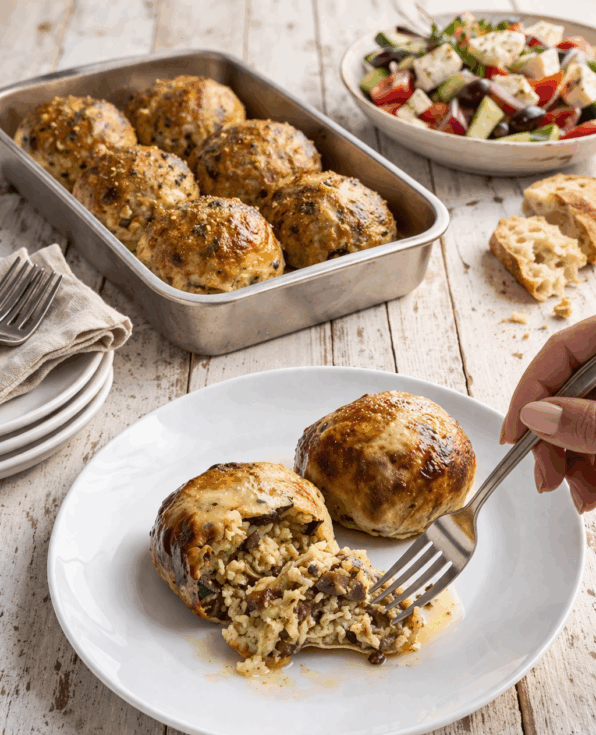
Tzigerosarmades are small, tightly wrapped parcels made with lamb offal, mainly liver and lungs, mixed with rice, fresh herbs, and spices, all wrapped in delicate caul fat. They are gently simmered and finished with a bright avgolemono sauce that brings everything together.
The result is rich, aromatic, and deeply satisfying. This is traditional Greek cooking at its core, nothing wasted, everything used with purpose.
A Dish Connected to Easter
Tzigerosarmades are traditionally prepared during Greek Orthodox Easter, right after the Lenten fast. After weeks of simplicity and restraint, this dish represents abundance and nourishment.
In many homes, the preparation starts early in the morning. The kitchen fills with activity. Ingredients are chopped, mixed, wrapped by hand. It is not just cooking, it is participation. Everyone has a role.
This is the kind of food that teaches patience. And more importantly, connection.
The Technique That Defines It
What makes tzigerosarmades unique is the use of caul fat. This thin, lace-like membrane wraps around the filling and slowly melts during cooking, keeping everything moist and flavorful.
If done correctly, the parcels hold their shape, remain tender, and develop a subtle richness without feeling heavy.
This is where experience matters. Too loose and they fall apart. Too tight and they become dense. Precision is everything.
Crockery & ingredients love using—find them all here: My Mediterranean Greek Pantry
For the caul fat
1 kg lamb caul fat
2 liters water
4 to 5 tablespoons white wine vinegar
For the filling
1 kg lamb offal, finely chopped
300 g Carolina rice
3 tablespoons olive oil
2 tablespoons butter
8 green onions, finely chopped
2 large onions, finely chopped
Juice of 1 lemon
800 ml water
1 bunch fresh parsley, finely chopped
1 bunch fresh dill, finely chopped
Salt
Black pepper
For serving
Strained Greek yogurt
Fresh dill, finely chopped
Lemon wedges
Directions
Place the caul fat in a large bowl with water and vinegar. Let it soak while you prepare the filling. This helps soften it and remove any strong odors.
Finely chop the offal and set aside.
Heat a wide pot over medium to high heat. Add half of the olive oil and butter, then add the offal. Season with salt and pepper and sauté for about 4 to 5 minutes, until lightly browned.
Remove the offal and set aside. In the same pot, add the remaining olive oil and butter. Add the green onions and dry onions, season lightly, and sauté until soft and slightly caramelized.
Return the offal to the pot, add the lemon juice, then stir in the rice and water. Lower the heat, cover, and let it simmer gently for about 15 minutes, stirring occasionally, until the rice is almost cooked. If needed, add a little extra water.
Remove from heat and fold in the chopped parsley and dill. Taste and adjust seasoning with salt, pepper, and a little extra lemon juice if needed.
Allow the filling to cool completely. For faster cooling, spread it out on a tray.
Preheat the oven to 190°C (375°F), fan setting.
Drain and rinse the caul fat thoroughly under cold running water. Gently squeeze out excess moisture, lay it out on your work surface, and pat dry.
Cut into approximately 20 to 22 pieces, removing any thick or tough parts.
Place about 2 tablespoons of filling in the center of each piece. Wrap carefully, folding the edges inward to seal. If a piece is smaller, use less filling.
Arrange the parcels on a baking tray with the seam side down. Season lightly with salt.
Bake for 30 to 40 minutes, until golden and lightly crisp on the outside.
Serve warm with Greek yogurt, fresh dill, and lemon wedges on the side.

June 1, 2017
Really informative blog post.Much thanks again. Fantastic.